The world is in a state of upheaval at the moment, and we’re all looking for things to make us feel less anxious. Maybe Classics can help.
Today’s interview is with E-J Graham
Is there a source from the ancient world that you find yourself coming back to when you want to feel better?
Some of my recent research has focused on terracotta votive offerings in the form of babies wrapped in swaddling bands. There is something about their chubby faces and the hopeful optimism of the ancient parents who dedicated them that is weirdly comforting. One of my favourites comes from the Etruscan city of Vulci, and is now on display in the Villa Giulia Museum in Rome. Even though only the head survives, his/her round cheeky face always makes me smile!

When did you first come across these babies?
It was Professor Maureen Carroll who introduced me to the babies, several years ago now, when she was starting her work on ancient infancy and I was looking for a new project. She had stumbled across them and suggested that they needed some attention so I started looking into them, expecting to go down a route that took me into ancient family and childhood studies but finding instead that it led me into the realm of votives, ultimately opening up a world of ancient material religion that also includes my other favourite type of object at the moment, anatomical votives.
Can you tell me a bit about these babies and their context?
They are terracotta models of newborn babies shown as if wrapped tightly from head to toe in swaddling bands, like this other one from Vulci (also now in the Villa Giulia). They are found in votive deposits at sanctuary sites in central Italy, mainly across Etruria, Latium and parts of Campania, where they were left as dedications to the gods during the third and second centuries BCE. The babies are often found alongside models of fragmented body parts conventionally known as anatomical votives and seem to have been part of the same tradition of petitioning and thanking the gods for good fortune, health and wellbeing, or marking key moments in the life course.

Why parents offered models of newborn babies to the gods has led to some debate. Interpretations range from the idea that they were dedicated by couples who hoped to have a child, to pregnant mothers anxious about their unborn child or who sought divine help with giving birth, as well as parents with unwell infants who were either petitioning or thanking the gods for some sort of divine healing (we have to remember that this was a time of very high infant mortality and limited neonatal medical knowledge so these were very real concerns). My own personal preference is that they were thank offerings dedicated to mark the moment when, under the protection of the gods, an infant had successfully survived the most dangerous first few months of its life and was ready to relinquish its swaddling bands. I talked a bit about this briefly in a short ‘object narrative’ recorded last year.
What is it about these babies that appeals to you most?
Well, admittedly they are not all chubby and cute, and in some lights they can look decidedly creepy! But they appeal for other reasons. One is their personal connection to the ordinary individuals of the ancient world – they were dedicated by actual parents with genuine worries about real babies, concerns that are recognisable today even to someone like me who isn’t a parent. These are the people whose everyday lives and identities we otherwise find it really hard to access using traditional sources. Plus, many of them are life-size and heavy so when you pick them up and hold them it doesn’t half feel like you are holding a real baby, which is quite an odd experience. I’m fascinated by the mixed up sensory experiences that this involves, and how the fact that they are like babies and not like babies at the same time must have been noticed by ancient people too.
And finally… what do you do, outside of Classics, to cheer yourself up?
I like to play tennis, although that has been on pause recently (the cancellation of this year’s Wimbledon is a disappointment because I guess we’ll never know if this really was going to be my year to win). I like getting completely lost in the world of a book and my bookgroup has kept me going over the last few months, even with the switch from the library to online. This month’s book was fondly described by one member as ‘the literary equivalent of rice pudding’ – the pudding you are very happy to eat if there isn’t anything else available, and which is pleasingly comforting when you settle down with it, so a perfect lockdown read! Even if it has now made me crave some good old fashioned rice pudding …
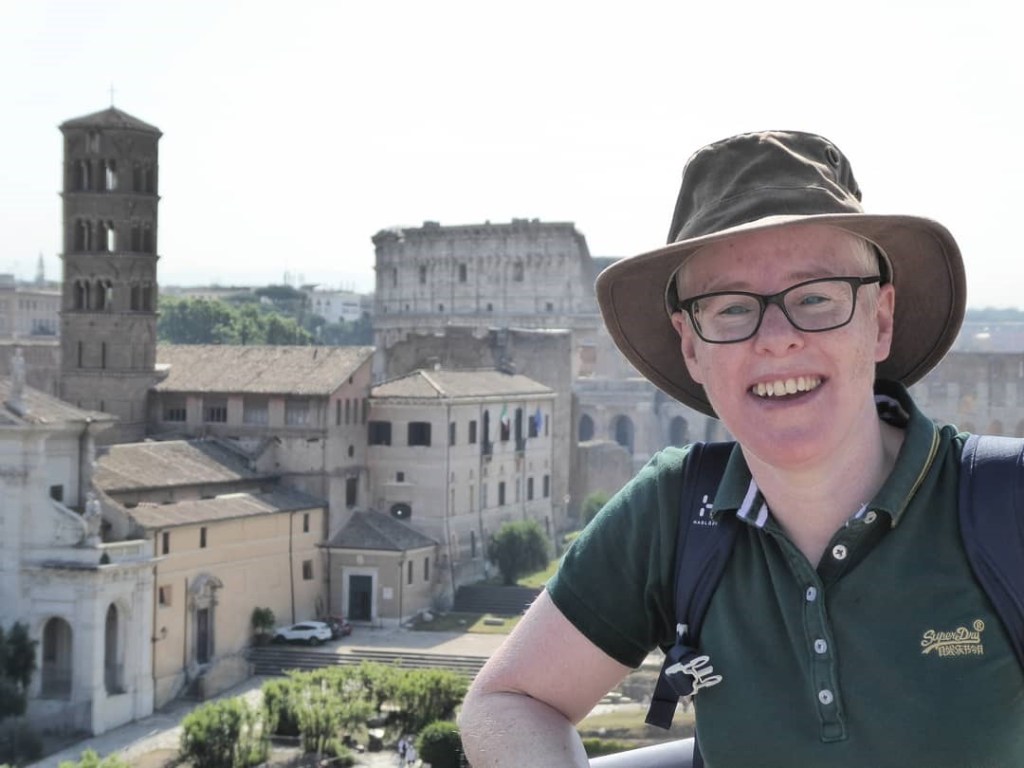
Emma-Jayne (E-J) Graham is Senior Lecturer in Classical Studies at The Open University, where she is currently working on a new multidisciplinary Level 1 module on ‘Cultures’ (A112) as well as teaching on ‘The Roman empire’ (A340) and the MA in Classical Studies. Find out more about her work on votives at www.thevotivesproject.org, and her book ‘Reassembling Religion in Roman Italy’ will be published later this year.
Catch up with all the Comfort Classics interview here.




 Classical Studies Support
Leave a comment